What the Dust Covered
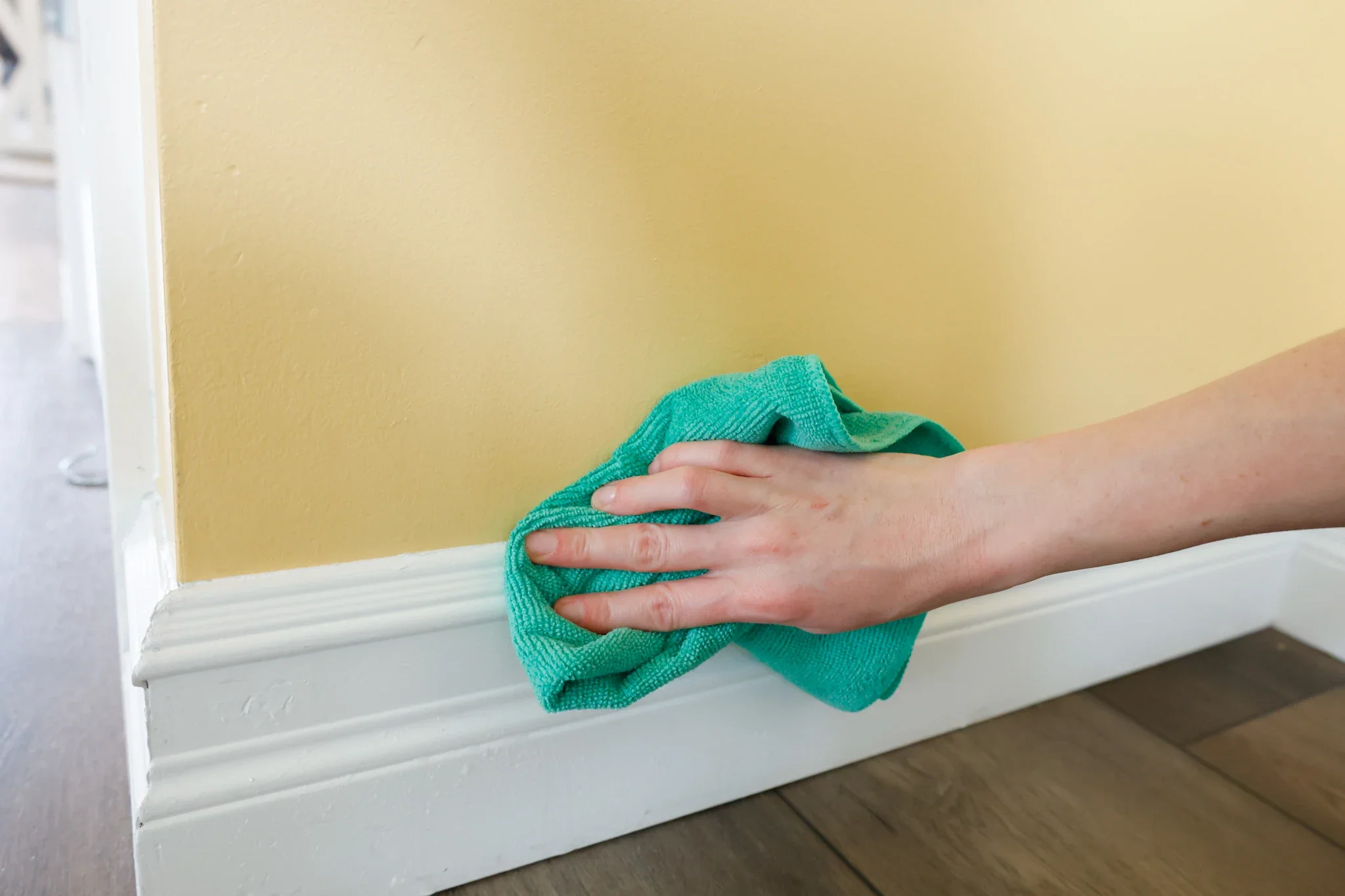
I have a confession to make: I am not a great housekeeper. I’m a single, full-time working mom, so the time I have leftover for house cleaning is minimal, and I don’t enjoy the work. In fact, Disaster Responder is probably the term that best fits my housecleaning style. In other words, I focus my attention on the eyesores. The spilled ketchup on the floor. The coffee filter full of old grinds. The mile-high pile of junk mail.
When life gets busy, I content myself with spot cleaning. And if I happen to have house guests, I’m crossing my fingers for blind ones.
All joking aside, is spot cleaning enough?
Despite my struggles with housekeeping, I recently challenged myself to do a deep clean of my entire house in preparation for the school year. This included crawling around on my hands and knees wiping my baseboards with a solution of bleach and water. It had been three years since I attempted anything like this, and I was both humbled and stunned by what I found.
A layer of dust and grime covered every baseboard. As I scrubbed each strip of paneling, I could not believe the beauty of the wood underneath the dirt. Once I saw what color the baseboards were supposed to be, I realized I could not stop there.
The walls were also covered in years of hand grease and smudges from a busy house with children and dogs. I began wiping and scrubbing the walls as well. After finishing two rooms, something heavy in my heart lifted. The house felt less oppressive. I could breathe again.
That was when the realization struck me: spot cleaning is not enough.
Often the dirtiest things in our lives are not obvious.
Spiritually speaking, we can also become spot cleaners. We focus on the obvious sins that make us look bad in the eyes of others, yet we avert our eyes from the dusty cracks and hidden corners where subtler dirt collects.
As Christians, we say we want God to live inside of us, to dwell in our spiritual homes. Yet when we only focus on our spiritual disasters as they come and go, we miss the chance to fully live in the presence of God. We hope God will be pleased with the decorative tablecloth and the clean carpets while ignoring the cobwebs on the ceiling and the dust coating the baseboards.
We try to fool both God and ourselves.
Jesus knew this tendency well. In Matthew 23:26, he rebuked the Pharisees, saying:
“Blind Pharisee! First clean the inside of the cup and dish, and then the outside also will be clean.”
The Pharisees cared deeply about outward appearances but ignored true spiritual cleanliness. If given the choice between a cup that is dirty on the outside or one that is dirty on the inside, I would certainly choose the cup that is clean where it matters most. I wouldn’t want a guest getting sick from contaminated water.
But for some people, the appearance of cleanliness matters more than the reality of it—even when others pay the price.
Does God expect our spiritual houses to be spotless?
I certainly hope not, because if that’s the case, I’m doomed.
We are sinful creatures, and we will never achieve spiritual perfection. The Bible makes this clear, especially in the writings of the Apostle Paul. We do not earn our way into heaven through moral superiority. We enter the Kingdom of God because God invites us in as guests. We are covered by grace.
So what does God want from his guests?
He wants a full relationship with us.
A full relationship means no more hiding. No more pretending. We cannot fool God, but we can be honest with him. We can open the doors of our lives instead of trying to keep certain rooms locked.
In Revelation, Jesus says:
“Behold, I stand at the door and knock. If anyone hears my voice and opens the door, I will come in and eat with him, and he with me.”
I don’t know about you, but if someone knocks on my door unexpectedly and my house is a disaster zone, I’m not eager to answer it. I usually turn off the lights, tell everyone to be quiet, and hide until the visitor leaves.
But when God is the guest in my house, I want to open the door.
Not because I’m pretending to be perfect, but because I want God to feel welcome in my home. I don’t want him discovering questionable yellow stains on the toilet seat or dust thick enough to write in.
I want to open the doors wide and treat my honored guest with the respect he deserves. Even though God loves me in the middle of the mess, love itself motivates me to care for the house he has chosen to enter.
There will always be parts of our lives that need cleaning, corners we overlook, dust we didn’t know was there. But the promise of Christ is not simply that we will manage the mess better.
The promise is that one day everything will be made new.
In Revelation 21, God declares:
“Behold, I am making all things new.”
For those who believe, life is lived in anticipation of that promise. Even now, we are witnessing the beginning of that renewal. The slow work of grace is already transforming the rooms of our lives, one corner at a time.
And there is no other place I would rather be than in the house God is patiently restoring.
Debby Handman is a former minister (M.Div), educator, and single mother writing from the misty crossroads of faith and survival in rural Oregon. She is the author of the acclaimed novels House on Sand and The Gambler’s Wife, and her upcoming release, House of Broken Vessels.