Mud, Spit, and the American Church
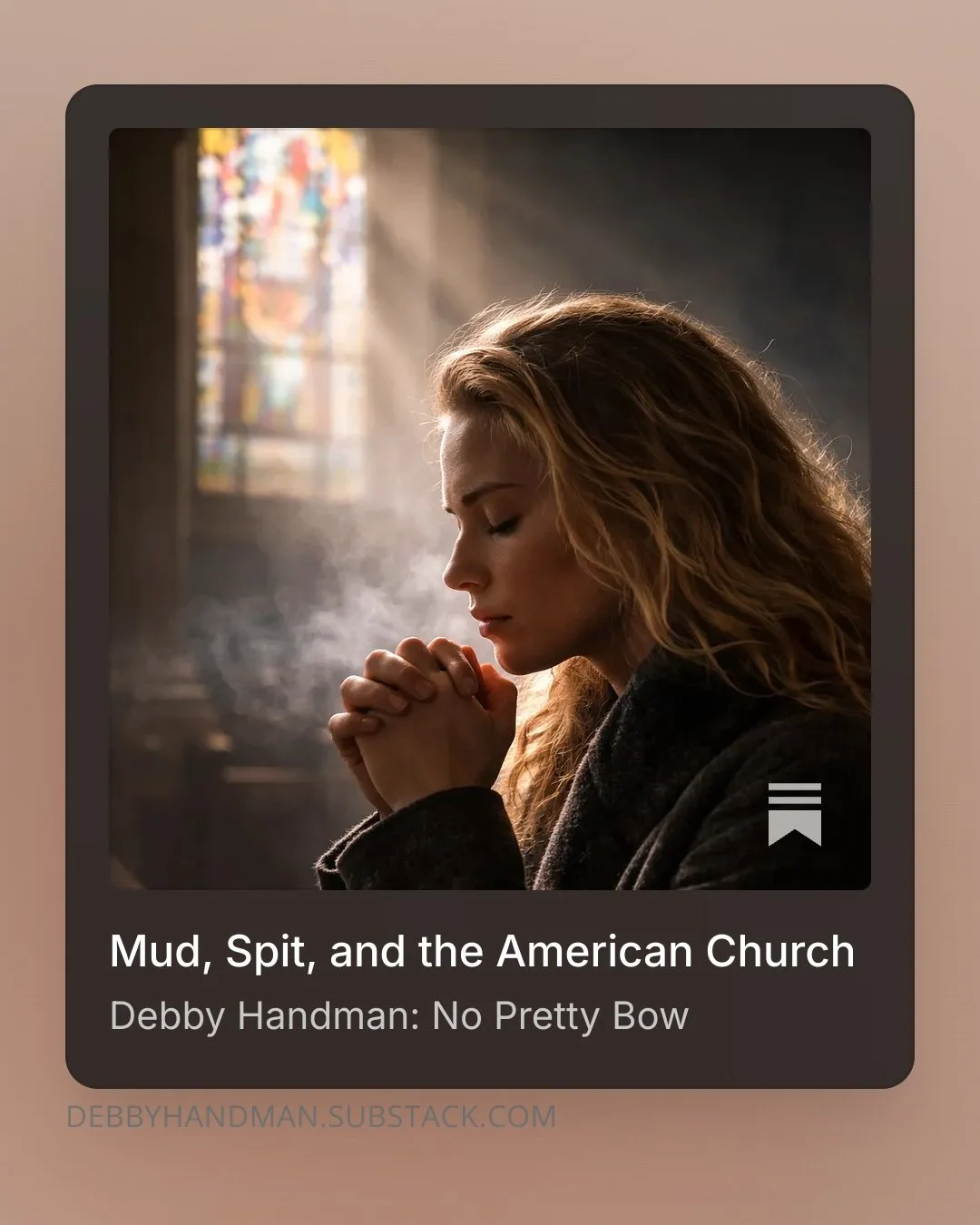
Something felt strange in the light of the cold winter sun. I was in the church, praying that the sunlight on my face might generate warmth, but it didn’t. I could practically see my breath. The heat never worked well in the old building. As my husband approached the pulpit to preach his last sermon, I felt the hush of the congregation. They could feel something was wrong.
He had admitted to his affair nearly six months ago. Not to them. Only to me. We had decided to leave quietly before the news spread beyond his control. We tried therapy, prayer, and long talks that resolved everything and nothing at the same time. I could feel the pain of the coming months rolling toward me like a slow-moving storm, so vast and wide there would be no escape. For the time being, I was still married, but as I vacillated between staying and leaving, my stomach lived in a perpetual state of nausea.
I don’t revisit this scene to dwell in the pain, but to mark it as the moment that changed my life. My divorce was an exile of biblical proportions. The moment my husband confessed and I chose to keep the secret, at least for a while, I became complicit in the lie he had been living for over a year. As a result, I lost much of what had forged my identity and my place in the world. I lost my church, my position, many of my relationships, and almost my faith. I was a good girl, a Christian, a person who didn’t lie, cheat, or steal. I was someone others looked up to and sought out for prayer and counsel. Now, I was a liar. I hated myself. My Christianity, at best, was sheer performance.
The realization that I was thoroughly inauthentic didn’t just wound me. It nearly shattered me.
The marriage did not stand, and I found myself at the beginning of a long spiritual journey, one that would become the most rewarding of my life. The affair, the quiet, shameful exit from the church in one fell swoop, destroyed the status and reputation I had built over nearly two decades. It undermined years of seminary training and my countless efforts to build a solid reputation in my community. I also lost my life partner. The shame created a quiet wedge in my family and in my relationship with the church. I have never felt so completely alone. I’m grateful I had two sons to raise, that I had to make a living. Those realities anchored the tragedy in the necessity of survival. Thank God for that.
I have felt the stain of being a divorced woman in the church, especially an unmarried one. When I introduce myself and receive the familiar follow-up questions—Are you married? Do you have children?—it often feels like my own version of a letter A stitched to my blouse, like the one Hester Prynne wore in The Scarlet Letter. My divorce, my singleness, are quiet marks against me. A part of me can’t help but smile at the irony. After the storm of my divorce, I am still standing, clinging to my faith and seeking to understand God in a way I never would have imagined before tragedy struck. I am, perhaps, just slightly proud that I haven’t melted into a puddle of shame. But to many, they only see a blemish on my good name. I wonder in these moments if, in our quest for purity, we have neglected the greater prize: wisdom.
Wisdom is a rare commodity these days. I have struggled to find it in our culture and in the church. We have succumbed to the temptation of the Invisible Man Ralph Ellison depicted so well. We choose the hollow man, the one we create in our own image, rather than the beaten and battered prophet who might do the worst thing possible: tell us the truth. When image rules the cultural scene, the battle scars of wisdom are, at best, unsightly and, at worst, unwelcome.
Churches often succumb to the same metrics as Hollywood—
Finish this article and join readers exploring faith, failure, healing, and hope without the pretty bow
Welcome to No Pretty Bow
A place for people who have discovered that faith is often messier, harder, and more beautiful than they expected.
If this essay resonates with you, you're not alone.
Here you'll find honest reflections on divorce, church hurt, healing, loneliness, and finding God in unexpected places.
Debby Handman is a former minister (M.Div), educator, and single mother writing from the misty crossroads of faith and survival in rural Oregon. She is the author of the acclaimed novels House on Sand and The Gambler’s Wife, and her upcoming release, House of Broken Vessels.