The Road to Hell is Paved
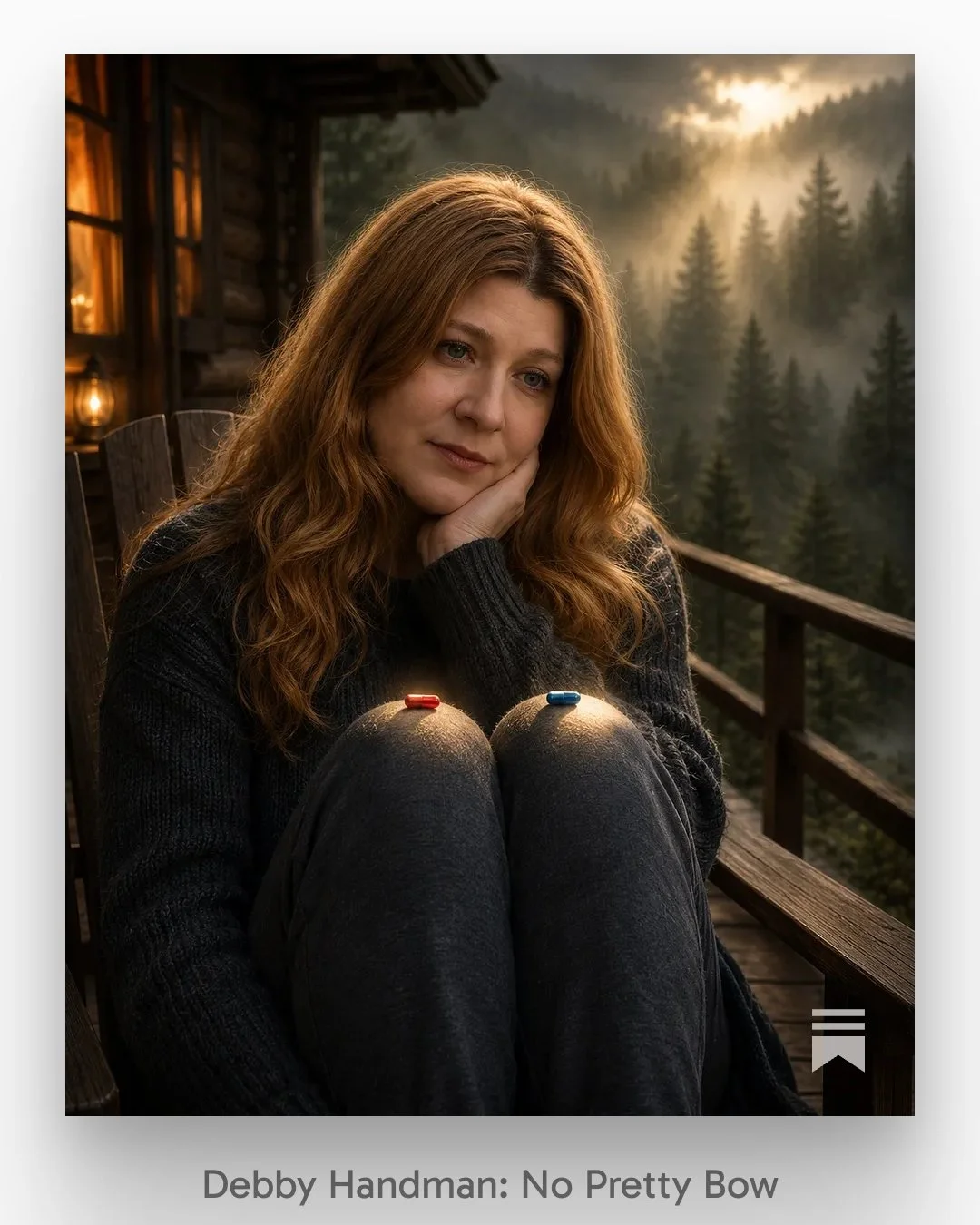
There were sins I committed that I had no intention of stopping. There. I have confessed them aloud.
The repentance of sin is crucial to Christian growth, but it’s the hardest aspect of being a Christian. Why? Because life on earth is indescribably difficult and God’s way is often the hard way. Sin on the other hand is unhealthy, destructive, and even painful, but it’s also fun, at least in the moment.
Christians live in the shadow of Christ’s goodness, his perfection, his selfless sacrifice. It is a lot to live up to. Can we be honest enough to admit, that there might be some relief in running to sin. During times of stress, grief and unhappiness running away from God might feel like a brief vacation from the arduous day to day of picking up our cross and following him. We are human beings, easily overcome by temptation. There are days we fall under the strain of it.
In the film The Matrix, Cypher was presented with both the red and the blue pill. The blue one would bind him eternally to the Matrix. He could live each day in pleasurable hedonism enjoying steak dinners, fine wine, women, wealth—whatever he desired. In the wake of such temptation, most of us would likely succumb. Who cares if my body is being used as a battery to operate AI? If my mind believes the simulation, then it’s good enough for me.
Cypher took the red pill first. Morpheus woke him from the mirage of the Matrix, but when he encountered the unpleasant aspects of life on the outside he said, “I wish I’d never taken it” And if we’re honest, we can admit we’ve all had moments when we regret embracing the truth.
It is Neo, our hero, who chooses the red pill. There will be no steak dinners in this scenario, but for Neo the truth matters more than the delusion. He awakens from the matrix mirage to face the brutal reality and hardships of life when it’s the least glamourous. Despite hardships, he chooses to stay outside the Matrix of delusion and to help others find their way. When Neo takes the red pill, he enters suffering. It is the cost of truth.
If I’m playing devil’s advocate to conventional cultural Christianity, it’s for good reason. The prosperity gospel and toxic positivity practiced in mainstream Christianity has the unfortunate consequence of minimizing the power of sin, allowing space for it to grow. If churches avoid honest conversations about suffering, they can unintentionally preach a gospel that denies the cross. Instead they offer exactly what the world already does, the dream of a life that circumvents pain, if we just find the right formula. Perhaps fear perpetuates it, a medieval superstition that Christ can be worn like a medallion to ward off all evil and misfortune.
Some Christians choose a blue pill form of Christianity, because the red pill would do the most frightening thing imaginable: undermine the narrative of their good intentions.
It is an ancient delusion. Centuries before Hollywood gave us the language of simulations, the medieval monk Bernard of Clairvaux (1090–1153) famously observed that “hell is full of good wishes or desires”—the historical root of the phrase the road to hell is paved with good intentions.
Bernard gave up wealth and privilege to join a strict, puritanical movement at Cîteaux Abbey in France, quickly rising to become an influential spokesman, counselor to kings, and spiritual advisor. His writings beautifully capture the importance of a personal relationship with Christ, a theology of self-examination, and the spiritual dangers of pride. Yet, even in the monastery, temptation found him.
Bernard ultimately couldn’t resist the lure of power and advocated for the Second Crusade—a military campaign that would kill thousands. His messages of love and self-examination became tragically woven into a bloody, power-hungry movement that offered none of the virtues he wrote so eloquently about.
The paradox of Bernard is a universal one. It is easy to proclaim aloud what we believe, but much more difficult to live it. When it comes to conquering sin our biggest hurdle has always been ourselves.
Sin itself is less to be feared than the narratives we spin to justify it—the subconscious plan we had all along to nurture the sin and allow it to grow so we could secretly or not so secretly indulge in our darkest pleasures. This is the power of the blue pill. It masks our sins as a virtue so we can sin freely—so we never have to admit we knew it was wrong from the start.
We know when our behaviors are unhealthy, but it is easier to feed the narrative of good intentions; it just stops being pleasant when people get hurt.
This is the grandest delusion Christians carry. It is our unwillingness to recognize that we hurt each other and to take action to change it. This is repentance—the ability to carry the weight of our actions. The Christian who chooses the red pill, chooses to carry the weight—to change their heart and their behavior, the Christian who chooses the blue pill reframes the narrative so they don’t have to.
The blue pill church leader says:
I’m protecting the church.
The red pill reveals:
I’m protecting my reputation.
The blue pill adulterer says:
I’m finally pursuing happiness.
The red pill reveals:
I want pleasure without sacrifice.
The blue pill embittered person says:
I’m speaking truth.
The red pill reveals:
I want revenge.
The blue pill workaholic says:
I’m providing for my family.
The red pill reveals:
I need achievement to feel valuable.
The blue pill soothes us. How easy it is to give ourselves noble intentions that perhaps are partially true. How seductive it is to gaslight ourselves into spiritual complacency. This is exactly what Jesus cautioned against in the Sermon on the Mount.
“You have heard the commandment that says, ‘You must not commit adultery.’ But I say, anyone who even looks at a woman with lust has already committed adultery with her in his heart.”
—Matthew 5:27-28
Jesus uses antitheses to show the blue/red pill dynamic—the paradox of what we present to the world and the darker things we hide in our heart. The “You have heard, but I say…” statements range from murder to divorce and each statement challenges the listener to examine themselves. The law can expose behavior, but Jesus exposes the heart.
He reveals the truth that if our heart is set on anger, lust, or vengeance, we are already walking the highway to hell.
Fleeing from God isn’t always dramatic. Sin grows in the quiet minutes before sleep or in the long drive to the grocery store. The darkness thrives in the stories we shape—what we desperately want ourselves and others to believe.
We convince ourselves that we are justified in placing ourselves in close proximity to the most seductive of temptations because it is reasonable under the circumstances. We walk a path where our feet are firmly planted toward our desires, even as we gift wrap it in our tidy stories of good intentions. We are never villains, only victims or heroes.
I know more about this than I wish I did. My husband and I were both Christian ministers. When he confessed his affair we made the decision together that we would leave the ministry. We made up excuses, that he was burned out, that we had decided to change careers due to God’s leading. It was a lie. I told myself, I was saving my husband’s dignity. People in the church did not need to know my personal business. I was protecting our marriage and allowing my husband the opportunity to heal.
None of it was true.
I was protecting myself.
Debby Handman is a former minister (M.Div), educator, and single mother writing from the misty crossroads of faith and survival in rural Oregon. She is the author of the acclaimed novels House on Sand and The Gambler’s Wife, and her upcoming release, House of Broken Vessels.